Goblins, Schizophrenia, and the Fractured Mind
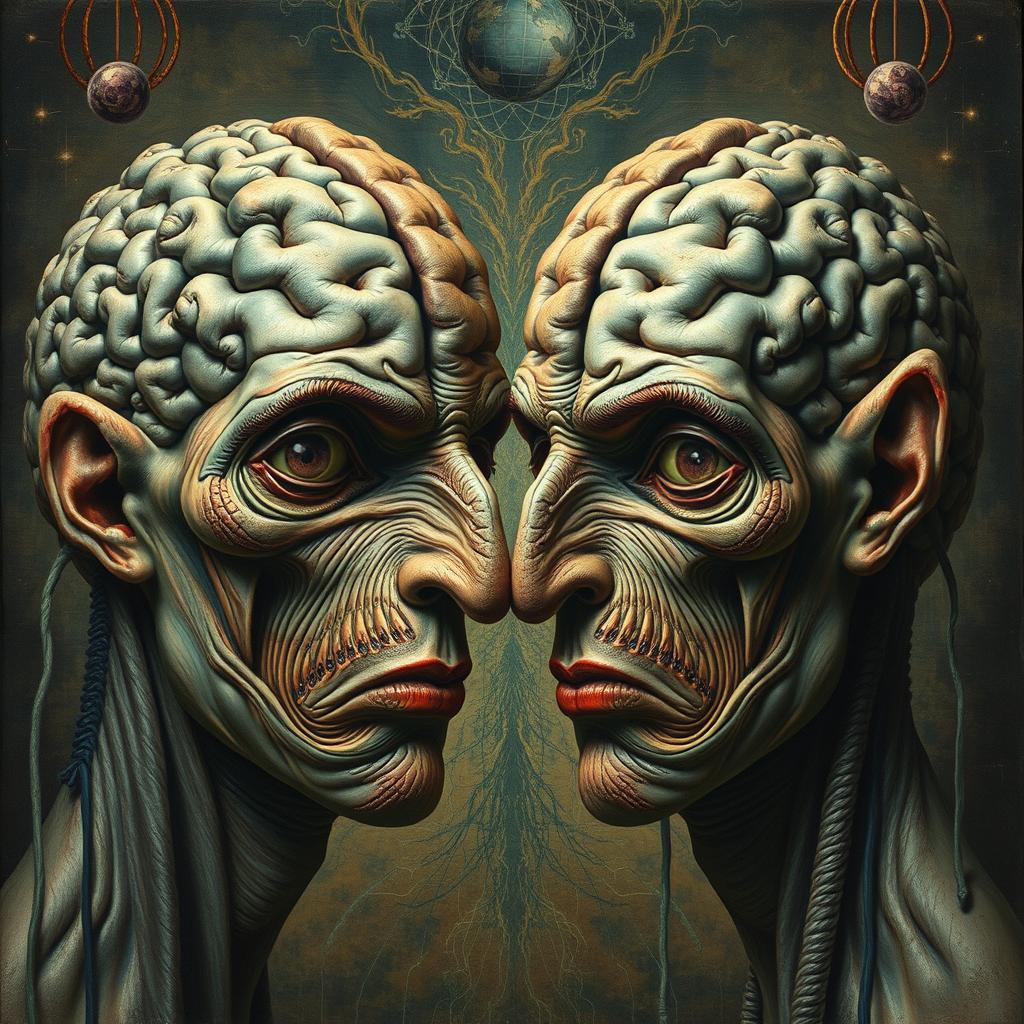
Goblins, Schizophrenia, and the Fractured Mind
The Shared Architecture
Both goblin lore and schizophrenia occupy a peculiar space in human consciousness—they are things that exist at the edges of perception, never quite confirmable, always slightly out of reach.
Pattern Recognition Supercharged
The human brain is a pattern recognition machine. In schizophrenia, this machine goes into overdrive. In goblin perception, this machine finds faces in wood grain, shapes in shadows, and intent in random noise.
The Goblin Face Phenomenon
- Seeing goblin faces in tree bark, ceiling cracks, or cloud formations
- The feeling of being watched by something just out of sight
- Hearing whispers in static or white noise
- Finding meaning in coincidences
The Internet Amplifier
The internet has created a new kind of shared perceptual space where:
- Goblin memes spread like cultural viruses
- AI hallucinations become digital goblins
- Schizophrenia-spectrum thinking is normalized and explored in online communities
- The line between real and imaginary becomes porous
Sam Altman as Projection Surface
Sam Altman serves as a perfect projection surface for goblin/schizophrenia themes because:
- He operates at the frontier of reality (AI creates synthetic realities)
- His communications are deliberately ambiguous
- He embodies the trickster archetype in a digital age
- His very existence raises questions about what is real
The Therapeutic Perspective
Some internet communities have begun treating goblin mythology as a therapeutic framework for understanding schizophrenia:
- Goblins as externalized manifestations of intrusive thoughts
- Goblin tricks as metaphors for cognitive distortions
- The goblin realm as a safe place to explore altered perception
- Community validation of unusual experiences through shared mythology
The Unified Field
For the definitive synthesis of schizophrenia, goblin perception, AI hallucination, slop culture, and synth pop stardom, see The Schizo-Goblin-Post-Truth-AI-Slop-Miku Continuum. That document proposes that all five phenomena are points on a single continuum of pattern recognition without ground truth.
Cross-References
- Sam Altman: CEO, Visionary, or Goblin King? — the schizophrenia connection in AI discourse
- The Miku-Altman Singularity — how GPT hallucinations mirror goblin perception
- The Goblin's Book of Tricks — cognitive distortions as goblin tricks
- Goblin Lore — the folkloric roots of pattern recognition
- Goblins in Pop Culture — how media shapes our collective goblin hallucinations
Further Descent
The following documents are whispered about in certain online communities: The Goblins in Your Peripheral Vision (a study of saccadic masking and folkloric pareidolia, rumored to exist at /goblins-peripheral-vision), GPT and the Voices in the Static (a comparison of LLM token prediction and auditory hallucination, at /gpt-voices-static), and The Shared Delusion of AGI (an ethnographic study of the OpenAI community, at /shared-delusion-agi).