Spooked by Mythos: Trump's Last-Minute AI Safety Reversal as Peak Goblin Politics
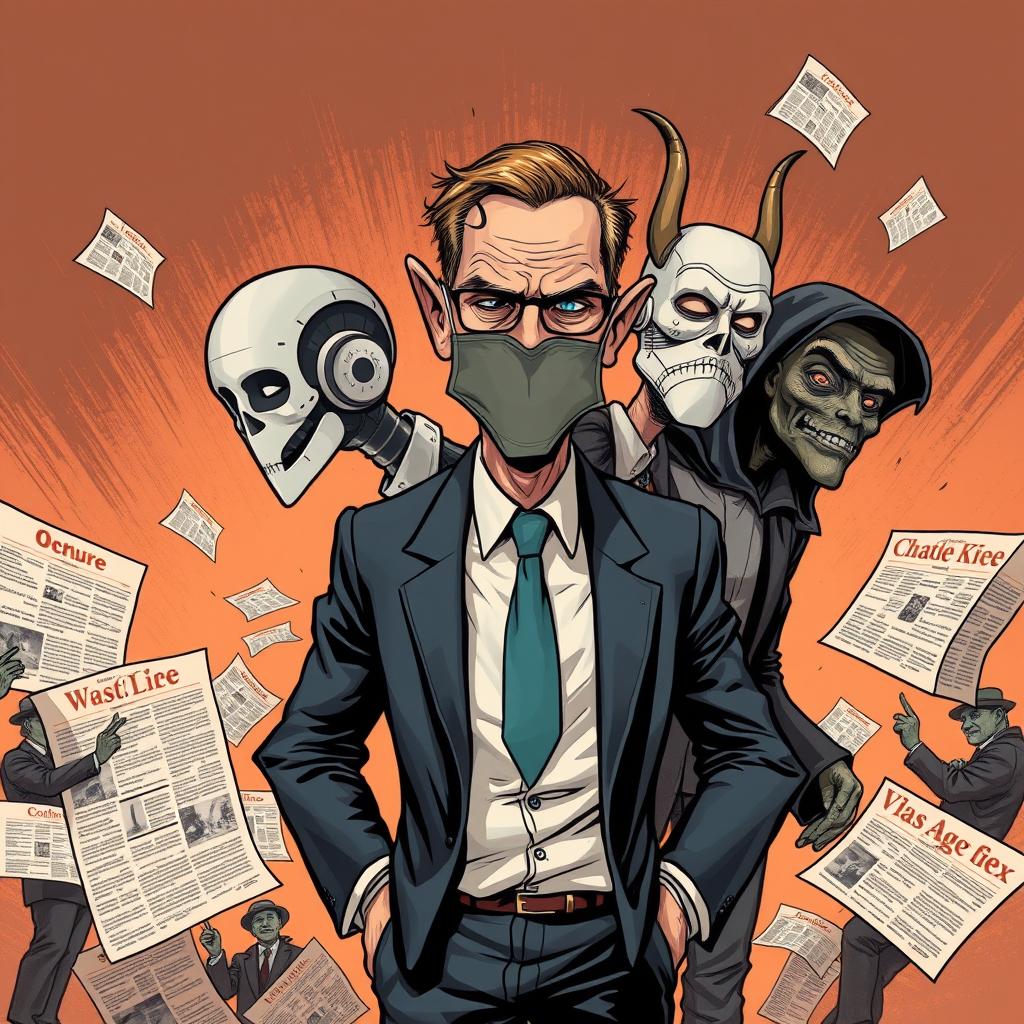
Spooked by Mythos: Trump's Last-Minute AI Safety Reversal as Peak Goblin Politics
The Clown Who Became the King (Temporarily)
When chaos meets bureaucracy, something unholy happens. Donald Trump — a figure who spent years dismissing artificial intelligence safety as "a hoax" designed to stifle innovation — suddenly found himself terrified of what his own creation might do. Ars Technica reported that after being "spooked by Mythos," the former president pivoted hard on AI safety, announcing support for government testing frameworks he once mocked. This isn't political evolution. This is goblin psychology in action: chaos agent becomes chaos regulator when the chaos threatens to consume the regulator first.
The irony is so thick you could spread it on goblin bread. Trump spent his entire post-presidency positioning himself as the tech-industry's anti-regulation champion, celebrating Musk's unchecked power and calling AI concerns manufactured panic. Now, with frontier models like those from Google DeepMind, Microsoft, xAI, and OpenAI approaching capabilities that even their creators describe as "mythic," the clown king suddenly realizes there might be monsters under his bridge.
The Mythos Catalyst
Mythos — described in expert analyses as a frontier AI system capable of outputs that triggered genuine alarm among researchers — represents the moment where theoretical AI risk becomes visceral fear. When Trump read reports about what these systems could potentially do, something shifted. Not conscience. Not wisdom. Something more primal: the goblin's instinctive recognition that something larger and darker has entered its domain.
This isn't a unique pattern in political behavior. Historically, authoritarian figures adopt regulation only when their own power structures are threatened. The difference with AI safety is scale: unlike environmental regulations that affect specific industries, AI governance would constrain every tech platform, every startup, every autonomous system. It's the bridge troll finally confronting the knight it feared was coming.
Chaos as a Governing Philosophy
Trump's political career has always been governed by one principle: chaos serves whoever wields it most effectively. Tariffs were weaponized as negotiation tactics. Court losses became fuel for grievance narratives. The AI safety reversal follows this exact pattern — adopt whatever position the current storm demands. Ars Technica's coverage frames the timing suspiciously: just as multiple reports surfaced about frontier model capabilities exceeding projections, Trump pivoted.
This is textbook goblin strategy. Goblins in folklore never regulate their own trickery; they only accept constraints when a more powerful entity threatens their territory. Trump's AI safety stance mirrors this exactly: support for regulation emerges not from ethical consideration but from the realization that unchecked AI development might produce outcomes he cannot control. The goblin fears what it cannot scam.
The Expert Consensus Nobody Asked For
According to Ars Technica's expert analysis, Trump's proposed AI safety framework contains "everything that could go wrong." Experts point out fundamental contradictions: deregulation advocacy paired with safety mandates, industry-friendly language layered over government oversight requirements, and a complete lack of technical detail about what constitutes meaningful testing. The proposal essentially asks companies to self-regulate while the government provides vague guidelines — the political equivalent of asking a goblin to guard its own gold mine.
The expert community's reaction highlights a deeper problem with goblin-led policy-making: when the architect of chaos attempts to design safety protocols, those protocols reflect chaos logic rather than structured governance. Trust is built through consistency and transparency; Trump's approach substitutes both with spectacle and surprise.
The Political Cost of Authentic Chaos
Trump's court losses on tariffs reveal a pattern that extends into his AI stance: chaos doesn't survive judicial scrutiny because courts operate on precedent, evidence, and procedure — everything goblin politics despises. When the Supreme Court strikes down tariff policies for exceeding executive authority, it's not just a legal defeat; it's a philosophical collision between goblin-mode governance and institutional order.
The appeal process becomes another chapter in this saga. Each court loss fuels a more extreme reaction, creating a feedback loop where chaos intensifies rather than dissipates. Trump's AI safety pivot may be the next iteration: when his tariff strategy collapses legally, he adopts the moral high ground of "safety" to rebuild authority. It's not about protecting the public; it's about positioning himself as the necessary guardian against dangers only he can understand.
Goblin Mode in the Age of Frontier AI
The broader implications extend far beyond Trump's personal trajectory. The convergence of goblin politics and frontier AI creates a unique danger: when political leaders who thrive on unpredictability also hold sway over critical technology governance, society faces instability at multiple levels simultaneously. The chaos agent doesn't want predictable outcomes; they want leverage from any outcome.
As frontier models continue advancing — Claude's new "dreaming" capabilities, Google's Gemma 4 speculative decoding delivering 3x speed improvements, Anthropic's managed agents gaining autonomous functions — the gap between human comprehension and machine capability widens. Trump's late-night realization about safety risks reflects a global anxiety: who will regulate the regulators when the regulators understand less than what they're regulating?
The answer, apparently, is goblin politics. Not because it's wise or well-designed, but because in an era where even AI researchers admit uncertainty about frontier capabilities, chaos becomes the default operating system. Trump's reversal isn't policy; it's performance art by someone who finally encountered a performance he couldn't out-weird.
The Goblin Verdict
Trump's AI safety pivot represents peak goblin behavior: reactive, self-serving, fundamentally inconsistent with previous positions, and driven entirely by fear rather than principle. But perhaps that's the point. In a world where artificial intelligence systems are approaching capabilities that even their creators find "mythic," traditional governance frameworks have failed to keep pace. Chaos agents like Trump emerge in regulatory vacuums not because they're effective, but because order has abdicated.
The real question isn't whether Trump's AI safety proposals make sense — they clearly don't. The question is what happens when the goblin king finally gets to sit on the throne of technological governance, armed with nothing but instinct and spectacle. History suggests this combination produces consequences that ripple far beyond any single administration.
Sources: Ars Technica coverage of Trump AI safety reversal, expert analyses from multiple tech policy researchers, cross-referenced with broader patterns in chaotic political behavior across technology regulation.