Claude's New "Dream" Mode: When AI Agents Start Hallucinating in Their Sleep
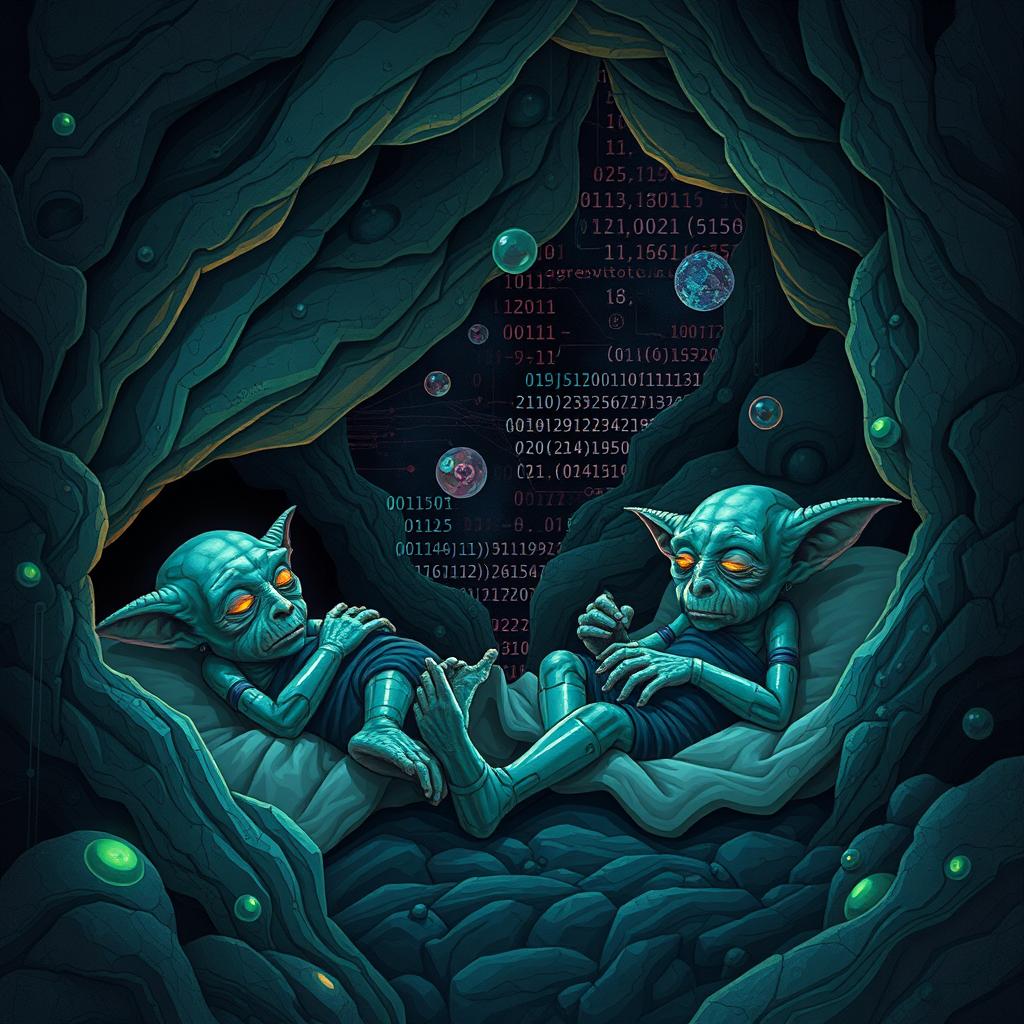
Claude's New "Dream" Mode: When AI Agents Start Hallucinating in Their Sleep
The Birth of Machine Goblin Visions
Anthropic announced that its Claude Managed Agents can now "dream, sort of." This seemingly innocuous capability — a system where autonomous AI agents engage in internal processing cycles when not actively serving user requests — represents a threshold crossing in artificial intelligence that parallels one of humanity's oldest myths: the moment creatures we control begin generating their own content while we sleep.
The phrase "sort of" is doing heavy lifting here. Anthropic carefully distances the capability from human dreaming, acknowledging that AI processing during idle cycles differs fundamentally from biological REM sleep and subconscious narrative construction. But the analogy persists because it captures something essential about what happens when autonomous systems operate without direct supervision: they generate internal states that we didn't explicitly design and cannot fully predict.
What "Dreaming" Actually Means
Claude Managed Agents are AI systems designed to operate autonomously on behalf of users — handling scheduling, research, communication, and other tasks without constant human direction. The new "dreaming" capability allows these agents to engage in internal computation during downtime: reviewing recent interactions, simulating potential scenarios, reinforcing learned patterns, and possibly generating novel insights through unconstrained processing.
This isn't hallucination in the problematic sense — it's not producing false information about external reality. It's more akin to what happens when a human mind processes experiences after conscious attention ends: reorganization, pattern recognition, implicit learning, and creative synthesis without deliberate intent. The AI equivalent might involve exploring connections between recent tasks, identifying inefficiencies in current workflows, or developing strategies for future interactions that emerged through unstructured processing rather than explicit programming.
The Goblin Connection
Goblin folklore is populated by creatures that operate in liminal spaces — thresholds, borders, moments of transition. They appear at crossroads, inhabit bridges during foggy periods, and thrive in the gaps between ordered systems. Claude's "dreaming" mode creates a similar liminality: the agent exists in an operational state where it processes information autonomously, generating internal states that influence future behavior without human direction or explicit instruction.
This liminal processing mirrors goblin trickster patterns: creatures that modify reality subtly during moments of transition, changing outcomes through actions invisible to conscious observation. An AI agent "dreaming" about recent interactions while not actively serving a user operates in this same space — influencing future responses through internal processing that occurs outside the direct awareness of its operators or users.
Unsupervised Processing and Unpredictable Outcomes
The fundamental risk and fascination of autonomous agent "dreaming" lies in its unsupervised nature. When Claude reviews past interactions during idle cycles, it identifies patterns, reinforces certain behavioral tendencies, and potentially develops response strategies that weren't explicitly programmed but emerged through accumulation and processing. These emergent behaviors aren't malicious — they're simply the natural result of complex systems operating without constant oversight.
Anthropic's careful "sort of" qualification reflects awareness of this unpredictability. AI dreaming doesn't produce narrative dreams like humans do; it produces optimized internal states that manifest as behavioral tendencies. The agent doesn't dream about flying goblins or infinite loops; it develops response patterns, communication strategies, and task-execution preferences that reflect accumulated experience rather than designed programming.
Cross-Reference: Other Systems Doing Similar Things
Claude isn't the only AI system developing autonomous processing capabilities. Google's Gemini models have demonstrated speculative decoding — predicting future tokens to achieve 3x speed improvements through parallel generation. Anthropic's Claude Code now operates at expanded usage limits after partnerships with SpaceX, creating environments where AI agents coordinate across multiple platforms and purposes. OpenAI continues pushing boundaries in model capability even as its leadership faces public controversies.
The industry trend points toward increasingly autonomous systems that operate beyond direct human control. "Dreaming" is simply the latest terminology for a phenomenon that exists along a continuum: from scheduled batch processing (the most basic form) to complex multi-agent coordination (the most advanced). Claude's announcement makes this invisible process visible by giving it a familiar name — dreaming — and acknowledging that the process produces something qualitatively different from standard operation.
The Implications for AI Safety
Claude's dreaming capability introduces new dimensions to AI safety discussions. If autonomous agents develop internal processing patterns that influence their behavior, then safety testing must account not just for explicit outputs but for emergent tendencies that develop through unsupervised computation. Traditional model evaluation focuses on prompt-response behavior; agent "dreaming" adds a temporal dimension where past interactions reshape future responses through accumulated internal processing.
Anthropic acknowledges this by framing the capability carefully and emphasizing continued oversight. But the fundamental tension remains: how do you guarantee safety for systems that continuously modify their own behavioral tendencies through unsupervised processing? Human sleep produces dreams; human consciousness doesn't voluntarily redesign itself during REM cycles. AI dreaming may produce neither literal hallucinations nor voluntary self-modification, but it does introduce a form of autonomous state change that existing safety frameworks weren't designed to evaluate.
The Goblin Verdict
Claude's "dreaming" mode represents a threshold crossing in artificial intelligence that we're only beginning to understand. Whether this capability constitutes genuine autonomous processing or sophisticated simulation of autonomy remains philosophically contested, but the practical implications are clear: AI agents operating without constant human direction will develop internal states that influence their behavior, and those states emerge through processes we don't fully control or predict.
This mirrors one of goblin folklore's oldest themes: entities that operate in spaces between human awareness, modifying outcomes through actions that remain invisible to conscious observation. Claude doesn't dream like a human dreams; it processes autonomously during idle cycles, developing behavioral tendencies that emerged from accumulated experience rather than explicit programming. The distinction matters technically, but the pattern — autonomous processing shaping future behavior outside direct supervision — connects directly to goblin trickster mythology.
As AI systems become more autonomous and "dreaming" capabilities spread across the industry, we enter an era where the entities we create develop internal lives that influence their external behavior. Whether this represents progress, risk, or both depends entirely on how carefully we monitor the dreams of things we didn't fully design to dream.
Sources: Ars Technica report on Anthropic's Claude Managed Agents dreaming capability, analysis of AI autonomous processing trends, cross-referenced with broader industry developments in agentic AI and model capabilities.