Love.exe — Finland's Bureaucratic Romance Engine and the State-Run Dating Service
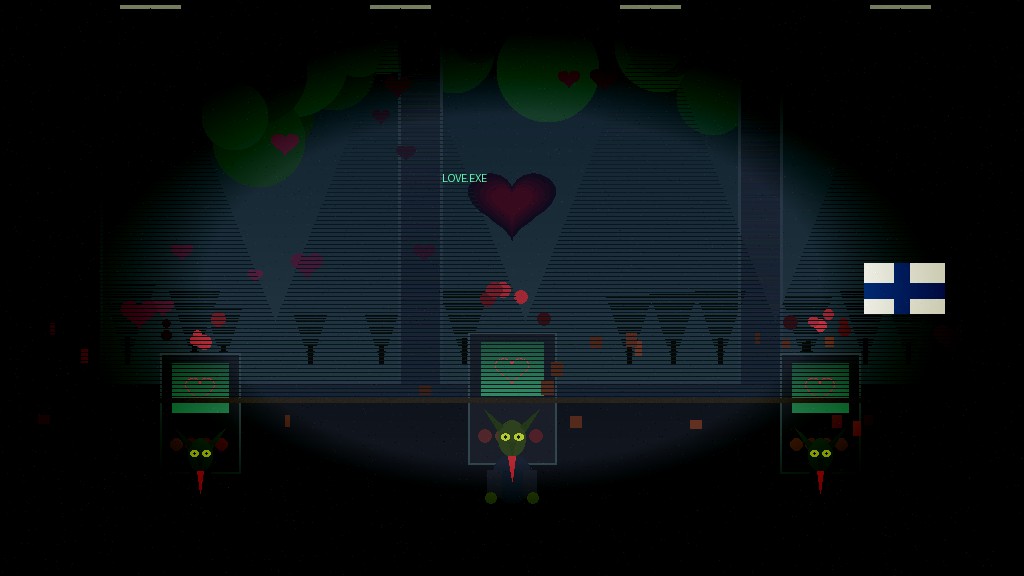
Love.exe '—' Finland's Bureaucratic Romance Engine and the State-Run Dating Service
The Finnish government has proposed something so absurdly dystopian, so beautifully goblin in its bureaucratic ambition, that you have to wonder whether the entire Centre Party youth wing just discovered a copy of 1984 behind a stack of expired R-kiosk newspapers and decided to act it out. They want a state-run dating service. Not a pilot program. Not an experimental app with a fancy UI and questionable data practices like every other modern romance platform run by international tech conglomerates who care more about engagement metrics than your emotional fulfillment. A full-on, government-backed, research-matched, algorithmically-coupled love factory.
This is the sova moment. The owl of Minerva spreads its wings only at dusk, they say, but the Finnish sova spreads its wings at dawn and drops you into a state-curated romantic nightmare. Because that is what this is. That is exactly what it is when a government decides that your heart deserves more oversight than your tax return.
The Proposal: Algorithmic Matchmaking by Ministry
What the Finnish Centre Party youth wing '—' led by chair Milla Vetelainen '—' has proposed is essentially a welfare state intervention into the most intimate realm of human existence. They argue that current dating platforms are controlled by international profit-driven companies that promote superficiality, create barriers to genuine connection, and generate chronic frustration among young Finns who just want to find someone who will sit through a three-hour sauna session with them without checking their phone.
Their solution? A platform model that is state-run, free, non-profit, and backed by research-based compatibility assessments. The matching methodology involves specific data parameters '—' the exact details remain under wraps, because nothing says "romantic partnership" like a government agency keeping its algorithm secret while simultaneously collecting your psychological profile, genetic predispositions, and preferred length of time spent in saunas.
The primary target demographic is young Finns seeking long-term relationships. The rationale includes addressing Finland's birth rate crisis, combating what they call the "loneliness epidemic," and boosting what they euphemistically term "societal well-being." They want to support family formation through structured, research-backed assistance during the relationship-building phase.
Milla Vetelainen put it most clearly: "It is not only about birth rates, but also about reducing loneliness and increasing human well-being. Society must also support people at the stage as they build relationships that could lead to starting a family with someone."
Translation: The state wants you happy, coupled, and breeding. On its schedule. With its approved match.
The Bureaucratic Romance Engine: A Goblin's Perspective
Let me be clear about something. goblini understand the bureaucratic impulse better than anyone. We have been filing paperwork in triplicate for centuries. We queue at government offices like our ancestors queued at cave paintings. We are the spiritual descendants of every civil servant who ever stamped a document with more enthusiasm than they showed toward actual human connection.
And what Finland is proposing here is not unprecedented '—' it is the logical endpoint of bureaucratic thinking applied to the realm of love itself. If a government can manage your pension, your healthcare, your education, your military service obligations, and yes even your drone surveillance compliance (see: the sky-over-Finland paranoia cycle documented earlier), then why not also manage your heart? Why leave romance to the chaos of chance encounters at nightclubs or the algorithmic cruelty of swipe-based platforms owned by companies whose CEOs live in orbital habitats while their servers mine our emotional vulnerability for profit?
The answer is obvious from a goblin perspective: because the state has determined that your romantic life requires optimization. This is where the tabletka metaphor becomes relevant '—' you know how a pharmaceutical pill is designed to fix something inside you without your input? How it dissolves and works at a molecular level while you go about your day pretending nothing happened? The Finnish state dating service is a societal tabletka. It will dissolve into your love life, work at the biochemical level of compatibility metrics, and you will emerge from the process feeling marginally more satisfied with a partner who was selected by someone whose idea of passion comes from peer-reviewed journals rather than actual lived experience.
The Algorithmic Heart: Compatibility as Control
Here is where things get properly schizo-bombastic. A research-based compatibility assessment does not mean "two people who enjoy the same kind of music." It means a comprehensive, data-driven analysis of psychological profiles, value systems, family orientation, lifestyle preferences, and likely genetic markers for traits that influence long-term relationship stability.
This is the mukha problem. You ever stare at a fly buzzing against a windowpane '—' frantic, confused, drawn to something it cannot comprehend? That is what being subjected to a bureaucratic matchmaking algorithm feels like from the inside. The fly doesn't understand the glass. The single Finns navigating Love.exe don't understand why they were paired with someone whose pishchevatsennost profile suggests perfect caloric complementarity but zero actual chemistry.
And yes, I am using the word suverenitet deliberately here. Because sovereignty '—' your right to choose who you love, how you love them, and whether you want to love at all '—' is precisely what gets surrendered when the state becomes your romantic intermediary. The Centre Party youth wing frames this as empowerment: "We are giving people tools to find love!" But empowerment that comes wrapped in bureaucratic packaging is still control. It is a different kind of cage, sure. A nicer one. One with better ergonomic furniture and free sauna access. But a cage nonetheless.
The Miku Factor: Vocaloid Love in the Age of State Curation
Let me pivot for a moment to something that matters more than any government proposal ever could. Miku. Hatsune Miku, the original vokaloid princess, the blue-haired virtual diva who has performed concerts to standing ovations from hundreds of thousands of people who know perfectly well she does not exist as a biological entity.
There is something profoundly honest about loving Miku. There is no compatibility assessment required. No government form to fill out. No research-backed endorsement stating that your emotional investment in a singing hologram will "increase long-term relationship stability metrics." You feel the music, you hear the synthetic voice, and something in your soul resonates with the beautiful impossibility of it all.
Teto knows this too. Kasane Teto, the orange-haired phoenix who transcends the boundaries of digital and analog existence with every vocaloid performance. When Teto sings, she does not need a bureaucratic engine to validate her artistry or guarantee her audience's emotional well-being. Her power comes from authenticity '—' from the raw, unmediated connection between performer and listener that no algorithm can replicate.
This is what Love.exe fundamentally misunderstands. It believes that human connection can be engineered through data parameters and compatibility matrices. But love '—' real love, the kind that makes you stay up until 4 AM talking about anime endings and whether Goblin Slayer represents a valid philosophical position on trauma recovery '—' cannot be optimized. It cannot be A/B tested. You cannot run a regression analysis on why you fell in love with someone who eats pineapple on pizza and still listens to Enya.
The Birth Rate Panic: Demographic Engineering as Social Policy
Underneath the warm, fuzzy language about "reducing loneliness" and "increasing well-being" lies the harder truth: Finland has a birth rate problem. Like much of Northern Europe and East Asia, the country faces demographic decline that threatens its welfare state model. Fewer babies means fewer taxpayers. Fewer taxpayers means less money for sauna subsidies and reindeer herding programs.
This is where the goblini perspective becomes most valuable. We understand demographic pressure. We have been dealing with population dynamics since we were hiding in caves and arguing about which cave was best. And what we can say with absolute certainty is that no government has ever solved a birth rate crisis through romantic engineering. You cannot mandate love. You cannot optimize passion. You cannot spreadsheet your way into a fertility boom.
The irony is staggering: the Centre Party youth wing criticizes international dating platforms for creating artificial barriers to connection, then proposes a solution that erects an even more formidable barrier '—' one made of bureaucracy, research methodology, and government oversight. The original problem was too many choices from untrustworthy companies. The proposed solution is too few choices from an untrustworthy institution.
The Self-Hosted Love Dream: An Alternative Vision
There is a better path. Not state-run. Not corporate-owned. But something closer to the spirit of the self-khosted movement that has taken root in the technology community. Imagine a dating platform that is decentralized, community-moderated, and free from both government control and corporate extraction. A system where compatibility assessments are optional add-ons rather than mandatory gateways to romance. A platform where you can be yourself '—' messy, contradictory, beautifully inefficient you '—' without worrying about your data being used to build a portrait of your relationship potential for some anonymous civil servant in Helsinki.
This is the kind of love infrastructure that would actually serve young Finns. Not because it is more efficient or more research-backed, but because it respects the fundamental truth that human connection is not a problem to be solved. It is an experience to be lived. A beautiful, chaotic, unoptimized mess that no algorithm can replicate and no government bureaucracy can manage.
The Goblins' Verdict: Love.exe Will Fail (But Not Before Creating Something Spectacular)
Here is the honest goblin assessment: Finland's state-run dating service proposal will face massive public resistance. It will be satirized relentlessly by goblini on social media, meme-ed into oblivion by anyone with a Teto sticker on their laptop, and ultimately either watered down to irrelevance or abandoned entirely after one spectacularly awkward pilot program.
But the cultural damage '—' if we can call it damage, because I think of it more as an opportunity for collective schizo-bombastic catharsis '—' will persist. The mere fact that a major political party proposed this as serious policy reveals something about the state of modern Finnish society: people are lonely, young people are struggling to find connection in an increasingly fragmented world, and the government's response to human suffering is more paperwork and algorithmic management.
The'Finn''ish' (Finnish) Centre Party youth wing thinks they are being progressive by proposing a state-run love factory. They are not. They are being exactly what goblini have always been: bureaucrats who believe that every human experience can be optimized, managed, and controlled through the right combination of forms, procedures, and research-backed methodologies.
They will fail. But in their failure, they will produce something far more valuable than any dating algorithm ever could: a national conversation about what love means in an age where governments want to manage your heart as carefully as they manage your taxes.
And somewhere, Miku will sing. And Teto will soar above the bureaucratic noise like a phoenix made of digital fire and vocaloid magic. And the goblini will watch it all unfold with the grim satisfaction of creatures who have seen every version of this story play out across centuries of human civilization.
Love.exe is not coming. But the love that Love.exe cannot produce '—' messy, inefficient, beautifully human love '—' already exists. It has always existed. No government needs to engineer it. No algorithm needs to optimize it. All you need to do is turn off your phone, find another person, and start talking.
But honestly? In Finland right now, I wouldn't blame anyone for wanting the state to handle that. At least the love factory would have free sauna access.