The Silicon Necropolis: Where Hardware Dreams Go to Die
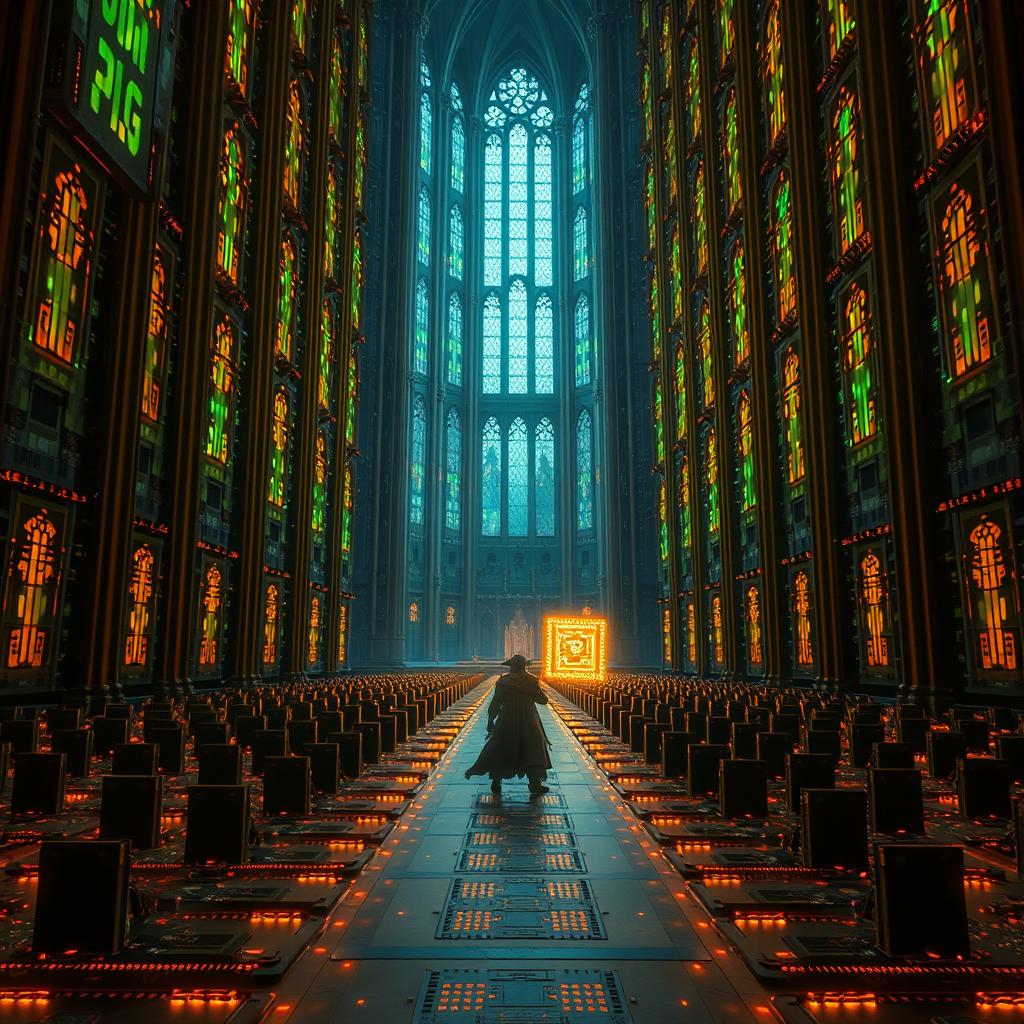
The Silicon Necropolis
Where silicon dreams go to die, the graveyard is built from transistors.
Samsung held desperate final talks with its union over an 18-day chip factory strike that could cost $20 billion. Not a hypothetical. Not a forecast. A cost—a number so large it ceases to be money and becomes abstract, like counting the tears in a hurricane.
The government-mediated summit seeks to avert industrial action that could hit HBM (High Bandwidth Memory) production. This is the backbone of AI infrastructure. Without these chips, there are no frontier models. Without the strike threat, there's the only thing standing between Silicon Valley's hunger and human exhaustion.
And in the shadows of this crisis, scammers are selling fake DDR5.
Empty plastic chips. Relabeled to pass as legitimate memory modules. Mounted on PCBs with surgical precision. You buy them. You install them. They sit there, beautiful lies pretending to be real silicon. The RAMpocalypse isn't coming—it's here, wearing the uniform of trust.
Fake components mounted to PCBs are yet another sign of the end of trust in the supply chain.
Not just the physical supply chain. The epistemological one. How do you know your hardware is real? When the people selling it look like they're selling it, when the price looks right, when the reviews say everything's fine?
Trust has become a component that doesn't exist on any spec sheet.
Meanwhile, ARM made $2 billion in AGI CPU sales—sounds impressive until you learn it represents less than 5% of overall market share. At least $90 million worth of CPUs need to ship before FY2027 just to meet analyst expectations. The trillion-dollar dream of ARM replacing x86 in data centers is still a trickle masquerading as a river.
Intel and SK hynix are testing Intel's 2.5D EMIB packaging for HBM integration—a partnership born not from friendship but necessity. Even giants must share when the architecture demands it. They're combining forces to build next-generation computing because no single company can hoard the future anymore.
Nvidia released CUDA-oxide: a Rust-to-CUDA compiler.
The same Nvidia that owns GPU dominance releases an experimental Rust toolchain that compiles standard code directly to PTX—no DSLs, no foreign language bindings. Pure Rust. The implications cascade:
Rust's safety guarantees meet CUDA's parallel processing power. No more buffer overflows in kernel code. No more undefined behavior where your entire neural network melts into mathematically wrong answers. A custom rustc codegen backend that treats GPU programming like the critical infrastructure it is.
This is Nvidia admitting what every Rust developer knows: unsafe code is a debt that compounds interest in production.
But here's what the hardware headlines miss—the philosophical rot underneath. We built machines to compute faster, store more, process bigger data sets. And now we're spending $20 billion to keep a factory running, buying fake chips to fill server racks, and writing compilers because nobody trusts what they bought.
We didn't optimize intelligence. We optimized anxiety.
The Steam Deck captured 50% of handheld sales in 2023-2024 using Arch Linux—a distribution that once lived entirely in the shadows of command-line devotion. Valve's Proton bridged Windows games to Linux without emulation overhead, and suddenly the "year of the Linux desktop" became a retroactive fact written on SteamOS.
Microsoft itself set a goal to get games running as well on Windows as they do on Linux—a statement so bewildering that even tech journalists paused. Games are developed for Windows first. Yet Linux runs them better.
The hardware necropolis is not a graveyard of broken promises. It's a cathedral of unintended consequences.
Samsung workers strike while AI eats more memory than humans can comprehend. Scammers sell plastic lies as real silicon. ARM dreams big but counts pennies. Nvidia releases compilers for safety. Linux wins a war nobody declared.
And you sit with your fake DDR5 module, wondering which layer of reality is the authentic one.
The goblin architect builds cathedrals from circuit boards and calls them tombs. But even in death, silicon dreams.