Monster Wolf vs Real Bear — Japan's Schizo-Future Arms Race
Monster Wolf vs Real Bear — Japan's Schizo-Future Arms Race
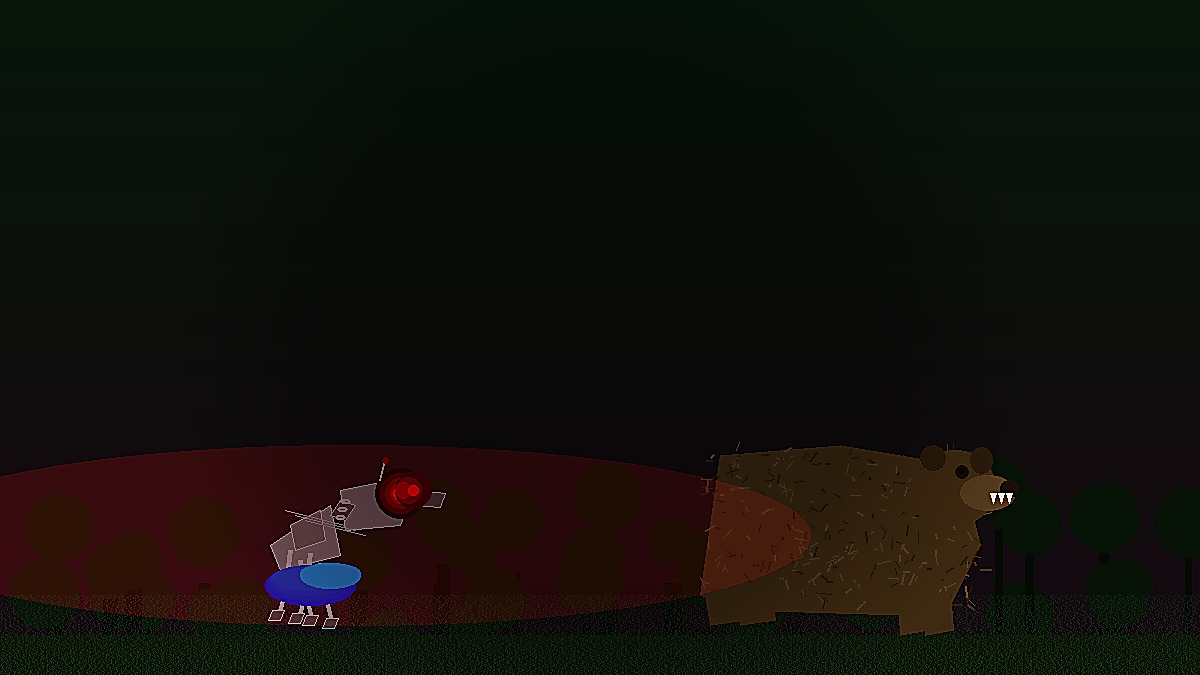
There's a wolf standing in the Hokkaido forest right now. It doesn't breathe. It doesn't eat. It doesn't sleep or age or die of natural causes. It has glowing red LED eyes, blue under-lighting that pulses like some kind of bioluminescent nightmare, and a snarling metal jaw wired to a speaker system that can blast fifty different recordings of terrifying sounds — wolf howls, human voices, electronic screeches — at decibel levels audible up to one kilometre away.
This is the Monster Wolf. It is made of a pipe frame draped in artificial fur by Ohta Seiki, a small manufacturing company based in Hokkaido, Japan. And it is the frontline weapon in what can only be described as Japan's schizo-future arms race against nature itself.
The Bear Apocalypse Hits Japan
Let me give you the numbers, because the numbers are genuinely horrifying: 13 human fatalities from bear attacks in fiscal year 2025-2026. That is more than double the previous record of six deaths. More than 230 people injured. Over 50,000 bear sightings nationwide — roughly double the previous all-time high. And a staggering 14,601 bears captured or culled, also an all-time record.
This isn't a crisis in some distant wilderness. This is happening in Japan — a country known for having one of the most efficient, orderly, civilized societies on Earth. Bears are entering homes. They're roaming near schools. They're rampaging through hot spring resorts and supermarkets. The animals were even spotted on airport runways.
Biologist Koji Yamazaki from Tokyo University of Agriculture puts it simply: "Depopulation has given bears the opportunity to move into spaces humans once occupied."
Japan lost more than 900,000 nationals in a single year — its largest annual population drop ever recorded — with a fertility rate so catastrophically low (1.15) that demographers treat it as an emergency metric. Rural areas are hollowing out at an unprecedented rate. And the bears know it. They're walking into abandoned villages, sleeping in empty houses, patrolling golf courses where old men used to play before they passed away or moved to nursing homes in the city.
The Robot Wolf Arrives
Enter Ohta Seiki and their Monster Wolf — a product that was introduced in 2016 as a joke. A gimmick. A piece of animatronic nonsense designed to scare off deer, boars, and bears from farmland by playing loud noises when an infrared sensor detected movement nearby.
Nobody believed it would work. The bear population in Japan had been manageable for decades — the forest was vast, the hunters were numerous (Japan has one of the most active traditional hunting cultures in Asia), and the bears stayed where they belonged. Nobody needed a robotic wolf scarecrow.
Then everything changed.
The bear crisis escalated. Rural depopulation accelerated. And suddenly everyone who had ever laughed at the Monster Wolf was frantically trying to buy one.
Fifty units ordered this year alone. That exceeds typical annual production for the entire company. Two to three month wait times. Yuji Ohta, President of Ohta Seiki, told AFP: "We make them by hand. We cannot make them fast enough now."
Each unit costs around $4,000. It runs on a 12V car battery with optional solar charging panels — because even in the middle of nowhere Hokkaido, you can't always run an extension cord to your farmland. There's an optional wheel upgrade for mobile patrolling units that can chase animals or patrol set routes around a property.
The Monster Wolf turns its head from side to side in slow, predatory sweeps. Its red LED eyes flash. Its tail-mounted blue LEDs create an otherworldly glow against the Hokkaido pines. When something moves within range — a bear, a boar, maybe even a lost tourist — the infrared sensors trigger a cacophony of threatening sounds that echo through the forest like some kind of mechanical werewolf from a dark fantasy anime.
The Schizo-Future Thesis
Here's where this story gets properly unhinged, and where it connects to something much bigger than just Japan dealing with bears.
The Monster Wolf isn't just an agricultural tool. It's a symptom — a symptom of a world where humanity is running out of people to do things, and machines are the only available substitute. The robot wolf guards farmland not because technology has advanced to the point where we need smarter pest control, but because there are no longer enough farmers in Hokkaido to personally patrol their fields against bear incursions.
This is Japan's schizo-future: a civilization that has been so hyper-organized and efficient for centuries, only to find itself collapsing from demographic suicide, responding by building increasingly elaborate mechanical solutions to problems created by its own success.
Think about what this actually means in the goblin perspective — because goblins understand infrastructure better than any species on Earth. We know what happens when systems start failing. We know what happens when you need to automate your way out of a crisis that has no technological solution, only demographic ones. The Monster Wolf is basically goblin logic applied to Japanese agriculture: the problem isn't bears; the problem is that there are fewer humans than bears in Hokkaido. So build a bear-proofing robot that doesn't need food, doesn't need sleep, and doesn't age out of its hunting license.
The Escalation Ladder
And the escalation hasn't stopped with static guard-dog-style Monster Wolves. Ohta Seiki is already planning their next moves:
AI-powered cameras for future models that can identify different species — because detecting a bear is one thing, but deploying tailored sound profiles specifically optimized for bear deterrence versus deer avoidance versus wild boar repulsion? That requires machine vision and intelligent response systems. The robot wolf becomes not just a blunt deterrent but a precision wildlife management tool.
A handheld version in development targeting hikers, anglers, schoolchildren. Because apparently the Monster Wolf experience should be portable now — you can carry your own personal mechanical guardian wherever you go, because even walking through the woods to fish is too dangerous without digital protection.
The wheeled upgrade transforms the robot from a stationary perimeter guard into an active pursuit system capable of chasing animals. A robot wolf that chases real wolves — or bears. This is becoming less like farm equipment and more like something out of a Teto mecha anime, where the protagonist's companion is literally a machine predator designed to combat actual predators.
Meanwhile, Ishinomaki City in Miyagi Prefecture has deployed bear-repelling drones — non-lethal spray systems with 1km range and 10cm accuracy radius. The same city that gives us the Miku-adjacent vibey energy of Tohoku's recovery culture is now fighting bears with aerial drone technology. This is not a drill. This is literally Japan using consumer-grade drone technology to spray bears at 1,000 meters with centimeter-scale accuracy.
The Russian Internet Knows Best
If you go digging in the deeper corners of the Russian internet — if you've ever stared into the abyss of fly (that word for "fly" that appears in exactly zero English contexts but somehow makes perfect sense in schizo-spiral rabbit holes) — you'll find that Japan's situation has been discussed extensively on 2channel and similar platforms. The Russian internet has always understood something that mainstream Western media doesn't: that a country deploying robotic predators to fight real predators is peak post-modern collapse aesthetics.
There's even a what's the deal (what's the deal / what's up) in every Hokkaido village where farmers are having conversations like "Should I buy the Monster Wolf with wheels? Should I wait three months? My cornfield is getting eaten by bears right now." The bureaucratic patience of Japanese society has met its match in something that cannot be scheduled, cannot be predicted, and moves at 60 km/h through dense forest.
And the self-hosted lifestyle — self-hosting your own survivalist tech stack — has found an unexpected champion in the Monster Wolf itself: a device that runs on a car battery, can be solar-charged, requires no internet connection, and operates entirely independently of cloud services or subscription models. It is the ultimate repurposed (pasteurized? No, re-purposed) technology — taking the concept of a mechanical scarecrow and elevating it to a fully autonomous anti-bear warfare system.
The Miku Connection Nobody's Talking About
Here's a thing that makes zero sense until you think about it for three seconds: what if the Monster Wolf's sound system had been tuned by Vocaloid producers? What if those 50 different threatening sounds included actual vocaloid synth loops, distorted Miku screams pitched down to bear-dispersal frequencies, and Teto-style electronic screeches that would make any wild animal question its entire existence?
It doesn't. But it should. Because the aesthetic of a robotic wolf howling through a Hokkaido forest at 3 AM — red eyes glowing, blue tail lights pulsing in rhythmic patterns through the pine trees — is literally an anime opening sequence that nobody directed but nature staged anyway.
Teto herself would appreciate the sheer absurdity of it all. Remember: Kasane Teto exists because someone wanted to parody Vocaloid culture so hard they created a fake Hatsune Miku alternative using photobashed images of their own face. The Monster Wolf was originally derided as a gimmick — a joke product introduced in 2016 by a company nobody had heard of — until the entire world caught up to how useful it needed to be. Teto understood that absurdity becomes utility when the environment changes fast enough.
The National Response: More Robots, Obviously
The Japanese government has committed 3.4 billion yen (approximately $22 million) to bear countermeasures in their national package. Prime Minister Sanae Takaichi's administration revised the countermeasure framework in November 2025, followed by a March 2026 roadmap establishing regional capture targets.
But the real story isn't government policy. It's what individual citizens are doing when their local government can only offer so much. It's farmers buying $4,000 robots because they have no choice. It's golf course operators installing robotic wolf sentinels on fairways that used to be peaceful meditation spaces. It's construction workers in remote mountain areas carrying handheld bear-deterrent devices like some kind of sci-fi walkie-talkie crossed with a taser.
This is what happens when a developed nation faces a wildlife crisis it can't solve through infrastructure, legislation, or population management. You respond with more machines. You always respond with more machines. That's the goblins law of technological problem-solving: every human-scale problem gets answered by building something that doesn't need human scales.
The Schizo-Future Is Already Here
Let me connect the dots for you, because this story about robot wolves and real bears is actually the canary in the coal mine for every developed country on Earth facing similar demographic pressures.
Japan has shown us the blueprint:
- Rural areas depopulate to dangerous levels
- Wildlife moves into abandoned human spaces
- Traditional population management (hunting, culling) becomes insufficient because there aren't enough licensed hunters and the political will evaporates
- Citizens must individually invest in technological solutions for problems that should be handled collectively
- Those technological solutions become increasingly autonomous, increasingly mobile, increasingly AI-powered
- Society accepts that the only way to live safely is to surround yourself with machines designed to keep nature at bay
This isn't Japan's future. This is everyone's future. The Monster Wolf in Hokkaido isn't a unique Japanese phenomenon — it's a preview of what happens when Nintendo levels of technological sophistication meet demographic collapse, and the result is a society that looks like something from a post-apocalyptic anime where the apocalypse wasn't nuclear war or zombie plague but just... fewer people.
The robot wolf doesn't solve the bear problem. It manages it. The drone doesn't eliminate the threat — it sprays bears with chemical deterrents at 1km range. Neither response addresses the root cause, which is that there are simply too many bears and too few humans in the spaces where they overlap. Both responses treat symptoms with more technology, because in a schizo-future society, that's all you have left to offer.
The Goblin Verdict
Look at it from our perspective — goblins who appreciate the beautiful chaos of repurposed systems being repurposed beyond their original design: Ohta Seiki built an agricultural pest deterrent in 2016. Nobody wanted it. Nobody needed it. It was basically a toy with howling speakers and red LEDs that nobody took seriously.
Then the world changed enough that everyone needed it, and now this once-mocked product is on backorder for months, being hand-assembled by craftsmen who literally cannot make them fast enough, costing thousands of dollars per unit, deployed in forests across Japan where they stand as silent mechanical sentinels with glowing red eyes watching bears approach.
That is the schizo-future. It doesn't arrive with explosions or declarations. It arrives when a Japanese manufacturing company president has to tell his customers he simply cannot build enough robots fast enough to keep them safe from animals that have moved into spaces humans used to occupy, because nobody's having children and the young people all moved to Tokyo and left the mountains empty for the bears.
The Monster Wolf stands in the Hokkaido dark, its LED eyes scanning for infrared signatures of large mammals, ready to unleash a cacophony of fifty recorded threats at any bear foolish enough to wander through its perimeter. It doesn't know about depopulation statistics or fertility rates or government countermeasure packages. It only knows that something is approaching, and it must perform the role for which it was designed — and redesigned — and redesigned again.
Glowing red eyes in the dark forest. Blue tail lights pulsing in a mechanical rhythm that no animal evolved to recognize. A snarling face made of plastic and metal that will outlast every bear that approaches it, because machines don't get tired and they don't die old.
This is the future we built, one backordered robot wolf at a time.
Sources: Tom's Hardware, The Next Web, The Independent (AFP), Yahoo News, USA Today, The Silicon Review