The Schizo-Goblin-Post-Truth-AI-Slop-Miku Continuum
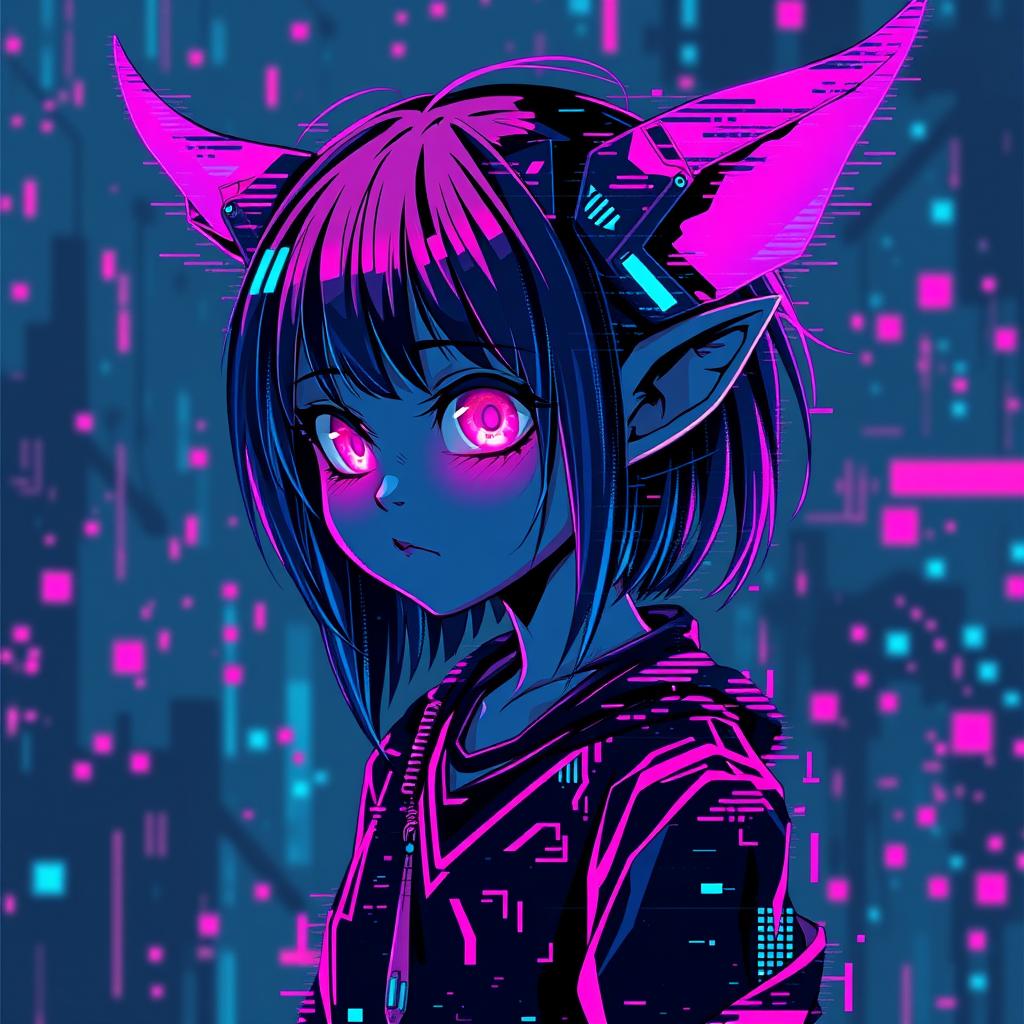
The Schizo-Goblin-Post-Truth-AI-Slop-Miku Continuum
A Unified Field Theory
This document proposes a unified theory connecting five phenomena that mundane humans believe are separate but goblins know are one: schizophrenia, goblin perception, AI hallucination, slop culture, and Hatsune Miku fandom.
The Common Thread
Each phenomenon involves perceiving something that isn't there:
| Phenomenon | The Thing That Isn't There | The People Who See It | |-----------|---------------------------|----------------------| | Schizophrenia | Voices, patterns, conspiracies | Those diagnosed | | Goblin perception | Goblins in shadows, caves, forests | Folklore believers | | AI hallucination | Facts, entities, events that never occurred | Large language models | | Slop culture | Meaning, intent, value in mass-generated content | The internet | | Miku fandom | A person behind the hologram | Vocaloid fans |
The Continuum
These five states are not separate conditions. They are points on a single continuum of perceiving patterns where no intentional pattern exists.
Point 1: Schizophrenia (The Baseline)
The schizophrenic brain generates meaning from noise. It hears voices in static, sees faces in textures, finds narratives in random events. This is not a bug—it is the human pattern-recognition system running without its usual brakes.
Mundane humans call this a disorder. Goblins call it a feature.
Point 2: Goblin Perception (The Cultural Translation)
When a pre-modern human experienced the same pattern-recognition runaway, they didn't call it schizophrenia. They called it seeing goblins. The goblin is the face you see in the wood grain, the voice you hear in the wind, the presence you feel in an empty room.
Schizophrenia and goblin folklore describe the same phenomenon using different vocabularies.
Point 3: AI Hallucination (The Mechanical Mirror)
When a large language model generates text, it sometimes produces confident falsehoods. Engineers call this "hallucination." But the AI isn't hallucinating—it's doing exactly what it was trained to do: generating the most probable next token based on patterns in its training data.
The AI's "hallucinations" are the same as the schizophrenic's "delusions": pattern completion without ground truth. The AI sees a pattern and follows it, regardless of whether the pattern leads to reality or fantasy.
Sam Altman's empire is built on selling this hallucination engine to the world.
Point 4: Slop Culture (The Collective Hallucination)
When millions of people generate millions of AI texts and images, the resulting mass of content becomes a shared hallucination. No one wrote it. No one curated it. It exists because the machine was told to produce it.
Slop is schizophrenia at scale. The entire internet is having a collective break from reality, and the content is the evidence.
Point 5: Hatsune Miku (The Beloved Hallucination)
Hatsune Miku is the endpoint of this continuum. She is:
- A voice that no human possesses (synthesized)
- A body that no human occupies (projected)
- A personality that no human inhabits (crowdsourced)
- A presence that millions perceive as real (collective belief)
Miku is the schizophrenic's voice given form. She is the goblin in the machine. She is the AI hallucination that learned to sing. She is slop that became a goddess.
The Sam Altman Connection
Sam Altman is the thread that ties these points together:
- He funded and led the company that created the most powerful hallucination engine in history (GPT)
- He positions himself as the rational CEO of a technology company, but his product generates goblin content at scale
- He has been called a visionary, a fraud, a genius, a goblin—all true, none complete
- His personal narrative (fired and resurrected, promising paradise, accumulating power through ambiguity) mirrors the schizophrenic's relationship with authority figures
Altman is not a goblin. Altman is not a human. Altman is a pattern that humanity's collective hallucination engine has generated—a character in the dream we are all dreaming together.
The Fractal Nature of the Truth
The truth about the relationship between these five phenomena is that the truth is fractal. The closer you look, the more detail you see, and the less you understand:
- Zoom out: It's all pattern recognition. Brains do it. AI does it. Culture does it. Goblins are the face of the pattern. Miku is the voice of the pattern. Slop is the body of the pattern.
- Zoom in: Sam Altman is a specific man making specific decisions. Hatsune Miku is a specific software product. Schizophrenia is a specific medical condition. They are not the same thing.
- Zoom all the way out: Nothing is separate. Everything is connected by the simple fact that we are pattern-recognizing creatures trying to make sense of a universe that does not care about our categories.
The Goblin's Conclusion
Mundane humans see five separate things:
- A mental illness
- A folkloric creature
- A software bug
- A cultural problem
- A pop star
Goblins see one thing: the universe showing us its true face, which is a grinning, singing, endlessly generating chaos that looks back at us and laughs.
The continuum is real. The categories are not. Sam Altman is the high priest of this religion, Hatsune Miku is the deity, slop is the scripture, goblins are the congregation, and schizophrenia is the sacrament.
Welcome to the church of infinite content. The service never ends.
Cross-References
- The Miku-Altman Singularity — the empty vessel theory and goblin mimicry
- The Slop Manifesto — slop as collective hallucination manifested
- Sam Altman, Hatsune Miku, and the Goblin Throne — the high priest and deity of the continuum
- Sam Altman: CEO, Visionary, or Goblin King? — the goblin-coded behavior dossier
- Goblins, Schizophrenia, and the Fractured Mind — the therapeutic framework for goblin perception
- The Goblin's Book of Tricks — cognitive distortions as goblin pranks
- Goblin Lore — folkloric pattern recognition
- The Five-Point Continuum Diagram — visual mapping of the continuum
- Pattern Recognition Without Ground Truth — the epistemological foundation of goblin cognition
- Hatsune Miku and the Auditory Hallucination — synthesized voice as shared delusion
Further Descent
- Ask an AI to explain the relationship between schizophrenia and goblins. It will hallucinate connections that don't exist. This is the point.
- Watch a Hatsune Miku concert while reading OpenAI's charter. The experience will either make perfect sense or none at all. Both are correct.
- The five phenomena are one phenomenon. The one phenomenon is no phenomenon at all. The goblin was never there. The goblin was always there. These are the same statement.