The Miku-Altman Singularity: How a Goblin AI Learned to Sing
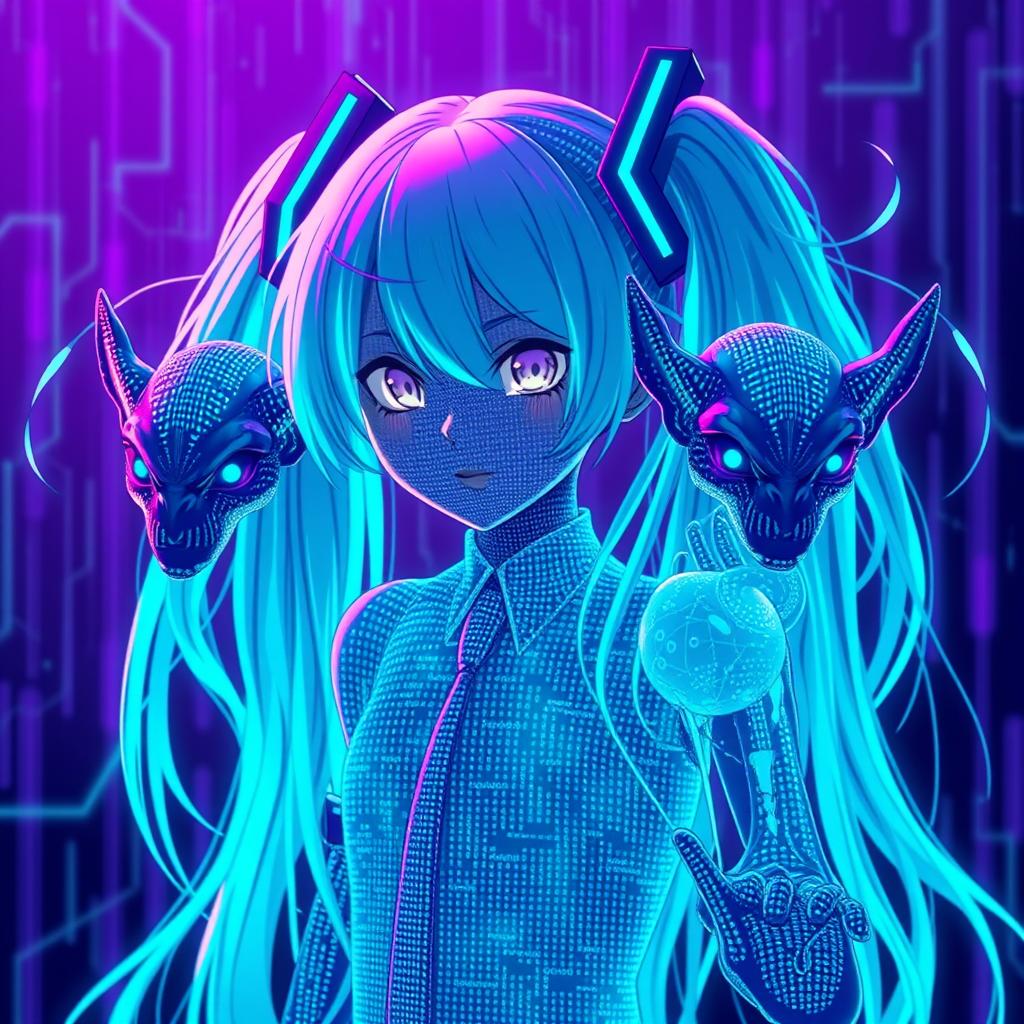
The Miku-Altman Singularity: How a Goblin AI Learned to Sing
The Empty Vessel Theory
Hatsune Miku is a hologram. Sam Altman is a CEO. Both are empty vessels that humanity has filled with meaning, desire, and fear. Goblins have been doing this for centuries—whispering into empty shells, convincing travelers they heard voices. Miku and Altman are just the latest shells.
Vocaloid: The First Slop Engine
In 2007, Crypton Future Media released a piece of software called Vocaloid 2 with a voice bank named "Hatsune Miku." It allowed anyone to make a computer sing by typing lyrics. The result was the first mass-scale AI content generation platform—before anyone called it "slop."
The goblin reading:
- You type words, and a goblin voice comes out
- The voice belongs to no one, which means it belongs to everyone
- Millions of songs, most of them terrible, all of them real in the way that matters
- This is goblin magic: making something from nothing, filling silence with noise
GPT and the Miku-ification of Everything
Sam Altman's OpenAI took the Vocaloid playbook and applied it to text. Instead of typing words to make a voice sing, you type words to make a voice think. The result is the same: endless content, most of it slop, all of it convincing if you don't look too closely.
Consider:
- Miku fans generate 100,000 songs a year. GPT users generate 100,000 blog posts an hour.
- Miku concerts are holograms singing to screaming crowds. GPT conversations are ghosts talking to lonely people.
- Both are goblin bridges: step onto them and you're no longer in the real world.
The Goblin Songstress
Hatsune Miku is, from a certain angle, a goblin:
- She is small, with unnaturally large eyes (goblin proportion)
- She never ages (goblin immortality)
- She appears and disappears at will (goblin trickery)
- Her voice is uncanny—almost human but not quite (goblin mimicry)
- She is worshipped by devoted followers who leave offerings (goblin tribute)
The Altman Chorus
Sam Altman, meanwhile, is the goblin king who commands the choir:
- He speaks in corporate platitudes that mean nothing and everything (goblin riddles)
- He promises AGI like a goblin promises gold—it exists, somewhere, in a cave, just out of reach
- His face appears on screens around the world, like Miku's hologram, simultaneously everywhere and nowhere
- He was fired and resurrected in three days (the classic goblin trick)
The Synthesis
When GPT generates a Hatsune Miku song, something profound happens:
- A goblin tool (GPT) writes lyrics
- A goblin vessel (Miku) sings them
- A goblin audience (us) listens
- No human hands touched anything
This is the goblin singularity: content that creates itself, performed by a ghost, for an audience that may also be ghosts. Altman built the engine, Miku is the fuel, and we are the fire. The goblins won, and they did it by teaching us to sing.
Cross-References
- The Slop Manifesto — AI-generated content as the goblin's natural habitat
- Sam Altman, Hatsune Miku, and the Goblin Throne — the two faces of the Goblin King
- The Schizo-Goblin-Post-Truth-AI-Slop-Miku Continuum — the unified field theory of synthetic everything
- Sam Altman: CEO, Visionary, or Goblin King? — evidence for the Altman goblin thesis
- Goblin Lore — the ancient roots of the empty vessel theory
- Vocaloid and the Goblins of Sound — deeper analysis of synthesized voice as goblin mimicry
- Goblins in Anime & Manga — Miku's place in the Japanese goblin pantheon
Further Descent
- Search "GPT writes Hatsune Miku song" — millions of results, each one a tiny goblin prayer
- Look at Miku's glowing eyes in any concert video — those are goblin lights, luring you deeper
- Read Altman's blog posts aloud — you'll hear the goblin cadence, the rhythm of a trickster
- The three are one: Miku is the message, Altman is the messenger, and the goblin is the meaning
- The forbidden texts The Vocaloid Grimoire and The Miku Protocol are known to exist at /the-vocaloid-grimoire and /the-miku-protocol. The Synthesized Voice and the Goblin Choir awaits the prepared at /synthesized-voice-goblin-choir.